Judicial Redirection: Supreme Court Mandates Fresh Trial for Former Governor Sule Lamido in ₦1.35bn Fraud Suit
A Resurrected Legal Battle
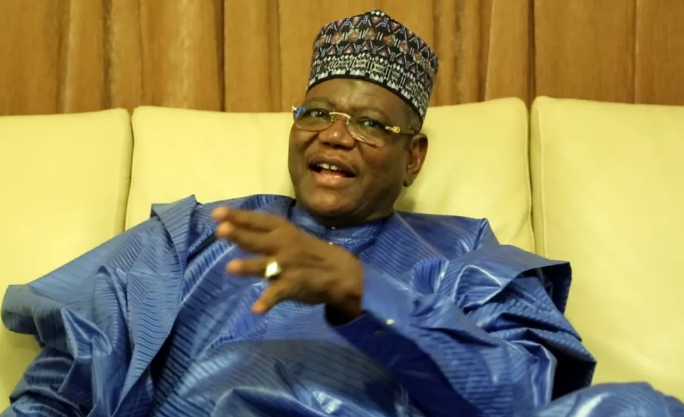
In a definitive twist to a decade-long legal odyssey, Justice Peter Lifu of the Federal High Court in Abuja has designated April 1, 2026, for the fresh arraignment of the former Governor of Jigawa State, Sule Lamido. The elder statesman stands accused by the Economic and Financial Crimes Commission (EFCC) of orchestrating a sophisticated ₦1.35 billion money laundering scheme during his tenure from 2007 to 2015.
The proceedings, which were slated to commence this Friday, were stalled by the notable absence of the former governor and his two sons, Aminu and Mustapha Lamido. Lead defense counsel Joe Agi (SAN) offered an apology to the court, citing the logistical impossibility of traveling from Kano State to the capital on such short notice.
The Anatomy of the Allegations
The EFCC’s case, first initiated in 2015, rests on a 27-count charge of financial impropriety. The prosecution alleges that the Lamido family utilized fictitious contract awards and private entities—specifically Bamaina Holdings Ltd and Speeds International Ltd—to siphon state resources.
The Prosecutorial Timeline:
2015–2022: The EFCC calls 16 witnesses to establish a prima facie case.
November 2022: Justice Ijeoma Ojukwu dismisses the defendants' "no-case submission," ordering them to open their defense.
July 2023: The Court of Appeal dramatically halts the trial, ruling that the Abuja court lacked territorial jurisdiction over crimes allegedly committed in Jigawa.
January 2026: The Supreme Court overturns the appellate ruling, declaring that the defendants indeed have a case to answer and ordering an immediate return to the Federal High Court.
Administrative Friction in the Courtroom
The re-commencement of the trial has not been without institutional friction. The EFCC’s legal team, led by Chile Okoroma (SAN), expressed surprise at the defendants' absence and disclosed a formal request to the Chief Judge. The Commission is seeking the return of the original trial judge, Justice Ijeoma Ojukwu, from her current posting in Calabar to maintain the continuity of the complex litigation.
While Justice Lifu noted that the reassignment of judges remains an administrative prerogative of the Chief Judge, the court’s primary focus remains on the April 1 deadline for the defendants to finally take their plea.
Analysis: A Test of Judicial Persistence
For the Nigerian judiciary, the Lamido case represents a critical litmus test for the "No-Case Submission" strategy often employed by high-profile defendants. The Supreme Court's unanimous decision to set aside the discharge of the former governor sends a clear signal: technical jurisdictional arguments will not serve as a permanent shield against substantive corruption trials. As the nation watches, the April 1 arraignment will determine if this long-standing quest for accountability finally reaches its evidentiary phase.
"The Supreme Court has set aside the decision that discharged Sule Lamido. The matter must now return to the Federal High Court for the continuation of justice." — Justice Abubakar Umar, Supreme Court of Nigeria