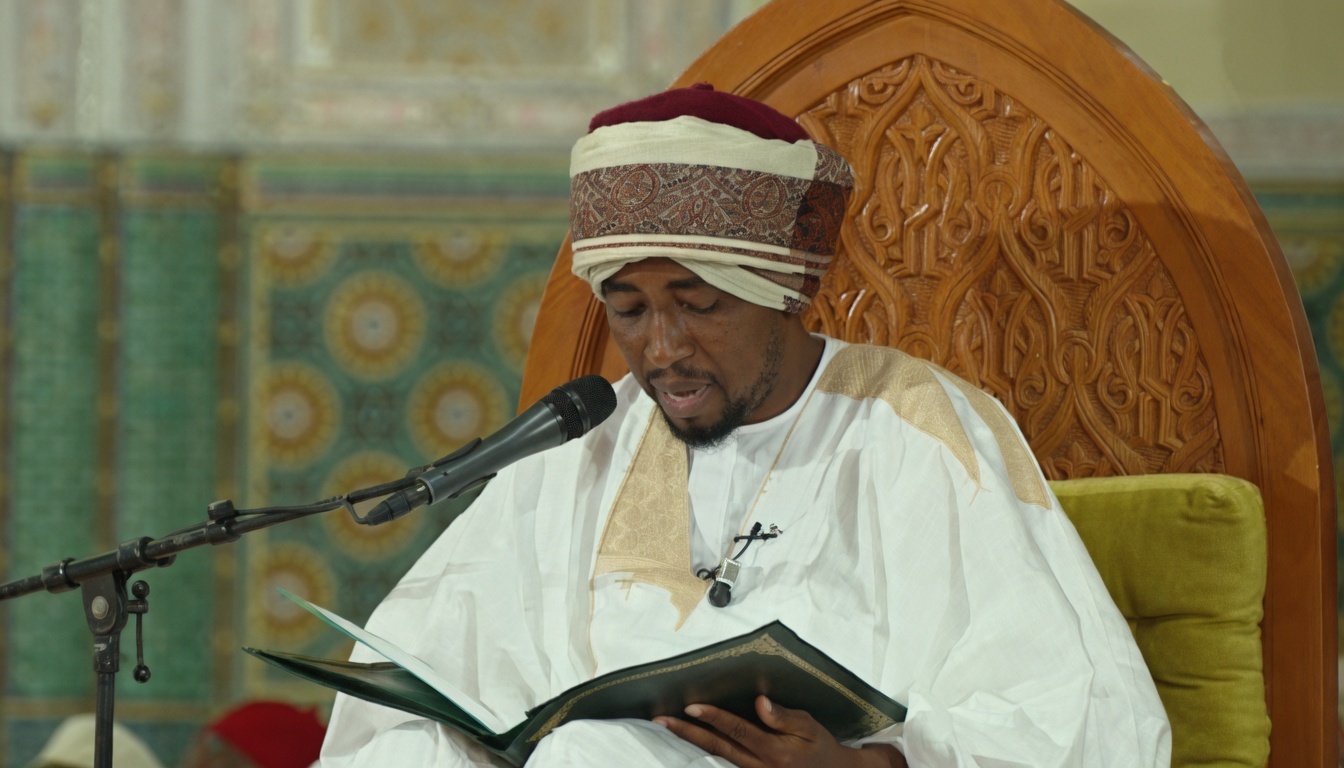
"Identity Over Outcomes": Professor Ibrahim Maqari Blasts APC’s Muslim–Muslim Ticket as a Failure
The Cleric’s Verdict: A Failed Experiment
In a sharp critique of the ruling All Progressives Congress (APC), the Chief Imam of the Abuja National Mosque, Professor Ibrahim Maqari, has declared that the controversial Muslim–Muslim ticket has failed to yield meaningful dividends for Nigerians. Speaking on the current state of the nation, the prominent Islamic scholar argued that the political arrangement has not translated into tangible socio-economic benefits for the Muslim community it ostensibly represented.
Maqari’s comments represent a significant shift in the religious discourse surrounding the 2023 mandate, as he characterized the promotion of the ticket as a "betrayal" of the very people who supported it based on faith-based solidarity.
The Weaponization of Identity
The Professor of Arabic and Islamic Studies warned that the use of sensitive identities—religion, ethnicity, and regionalism—has become a tool for politicians to secure power without accountability.
Key Points from Maqari’s Critique:
Exploitation of Faith: He argued that political actors frequently manipulate religious divisions for personal gain rather than advancing the collective interests of the citizenry.
Lack of Tangible Results: Maqari noted that despite the "Muslim-Muslim" nature of the presidency, the basic needs of ordinary Muslims and Nigerians at large remain unaddressed.
A Call to "Face Reality": He urged Nigerians to stop being swayed by identity politics and to become more critical of campaign promises that prioritize "who" a candidate is over "what" they can deliver.
Analysis: The Crumbling of Religious Solidarity
Professor Maqari’s intervention highlights a growing disillusionment within the Islamic clerical establishment toward the "Renewed Hope" administration. During the 2023 campaign, the APC’s choice of Bola Ahmed Tinubu (a Southern Muslim) and Kashim Shettima (a Northern Muslim) was marketed as a strategic alliance for development. However, with inflation hitting historic highs and security challenges persisting across the North, religious leaders are increasingly finding it difficult to justify the "faith-based" mandate to their congregants. By calling it a "hollow ritual" of identity, Maqari is signaling that in 2027, religious identity may no longer be a guaranteed shortcut to the hearts of the Northern electorate.
"Many politicians exploit sensitive identities such as religion and ethnicity to secure power... Nigerians must face reality and become more critical of political promises." — Professor Ibrahim Maqari