Victory for Accountability: High Court Rules Nigerians Have the Right to Record Police on Duty
A Landmark Precedent in Warri
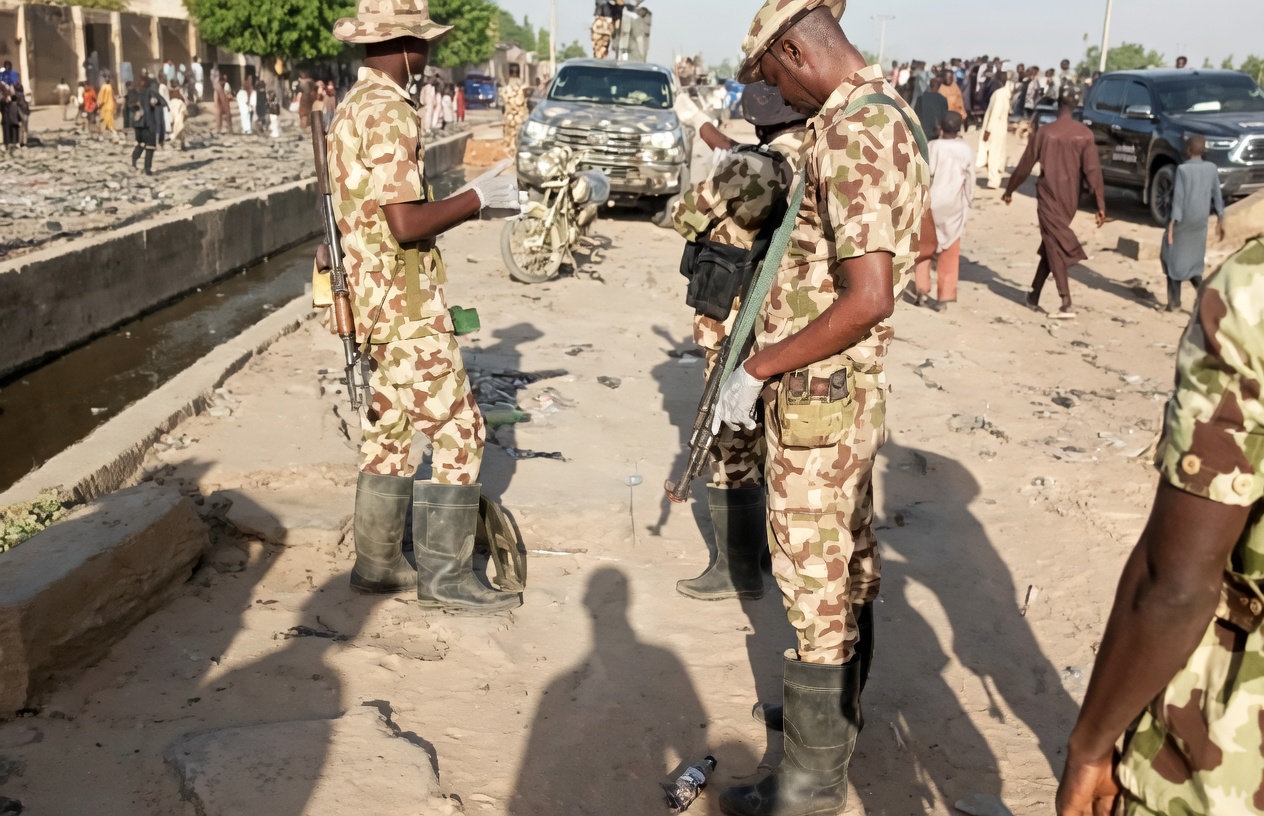
In a decisive victory for civil liberties, the Federal High Court in Warri, Delta State, has ruled that Nigerians possess a constitutional right to record police officers performing their duties in public. Presiding Judge H. A. Nganjiwa, delivering the judgment on Tuesday, March 17, 2026, affirmed that documenting police actions is a protected form of freedom of expression under Section 39 of the Nigerian Constitution.
The suit (FHC/WR/CS/87/2025) was filed as public interest litigation by activist Maxwell Uwaifo. The court’s ruling effectively strips away the "anonymous policing" veil that has often led to impunity, extortion, and harassment during stop-and-search operations.
Key Pronouncements of the Court
The court granted all of the applicant's prayers, establishing clear mandates for the Nigeria Police Force (NPF) and the Police Service Commission:
Right to Record: It is officially lawful for citizens to film or photograph officers in public spaces. Harassment, arrest, or confiscation of devices for doing so is unconstitutional.
Mandatory Identification: Police officers must wear full uniforms with visible name tags and force numbers while on duty.
Illegality of Anonymous Policing: Stop-and-search operations conducted by officers in incomplete uniforms or unmarked vehicles without proper identification were declared illegal.
Damages Awarded: The court awarded ₦5 million to Mr. Uwaifo for the violation of his fundamental rights and ₦2 million in litigation costs.
The Road to Justice: From #EndSARS to Today
This ruling addresses deep-seated trauma within the Nigerian psyche, particularly the legacy of the disbanded Special Anti-Robbery Squad (SARS). Mr. Uwaifo’s affidavit detailed personal encounters in May and June 2025 where he was aggressively questioned and threatened with arrest for attempting to record officers at checkpoints near Benin and Warri.
The court noted that while the NPF leadership has previously stated on social media that recording is not a crime, the lack of a judicial mandate often left citizens at the mercy of "overzealous" officers. This judgment now provides a legal shield that can be cited in any courtroom in the country.
Analysis: A Shield Against Impunity
This judgment is more than a legal win; it is a structural reform. By requiring the Police Service Commission to issue new guidelines and training manuals reflecting this right, the court is forcing a cultural shift within the force. For years, the "don't record me" threat was used to hide extortion and brutality. Now, every smartphone in Nigeria is effectively a body-worn camera for accountability. However, the true test will lie in the enforcement of the perpetual injunction restraining the IGP and his agents from further infringing on these rights. For the average Nigerian, the message is clear: the law now explicitly protects your lens.
"This judgement has significant implications for policing standards... the court made far-reaching pronouncements on police accountability and citizens’ constitutional rights." — Maxwell Uwaifo, Applicant