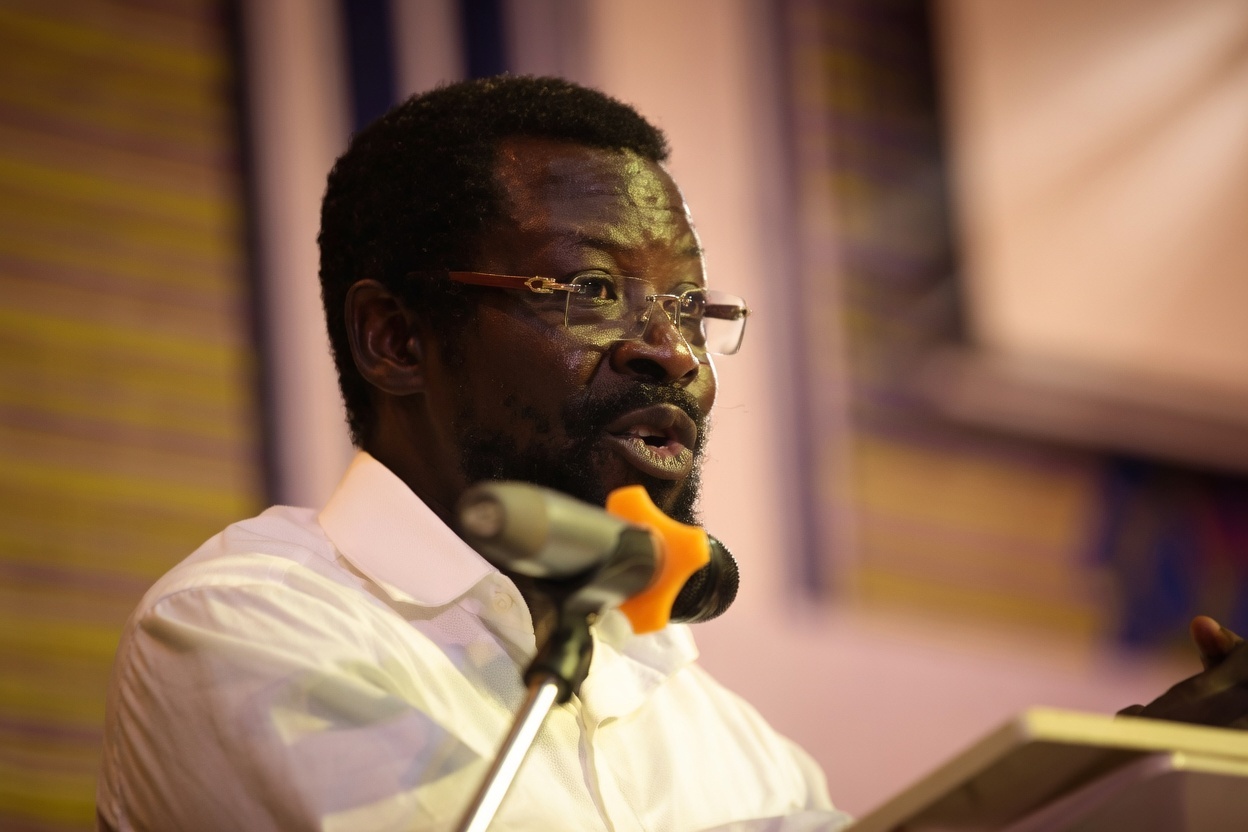
"Hollow Ritual": Dele Farotimi Scathingly Critiques Nigeria’s Democracy Ahead of 2027
The Illusion of Choice
In a lecture delivered at the Christian Consultative Assembly in March 2026, human rights lawyer and activist Dele Farotimi condemned Nigeria’s electoral history as a "hollow ritual." Addressing the theme "2027 Election: What Are the Options?" organized by the Christian Social Movement of Nigeria (CSMN), Farotimi argued that the current system lacks the fundamental democratic requirement where citizens’ choices truly dictate leadership.
Farotimi highlighted a systemic failure where power is "snatched" rather than earned through the ballot. He warned that the perception of elections as a predetermined outcome fosters a dangerous level of voter apathy, which in turn facilitates political manipulation.
The Turnout Crisis: By the Numbers
Farotimi cited the 2023 general elections as evidence of a massive disconnect between the registered electorate and those who actually cast ballots. He noted that while approximately 93.4 million Nigerians were registered to vote, the actual participation was historically low.
2023 Presidential Election Statistics: | Category | Official Data | | :--- | :--- | | Total Registered Voters | 93,469,008 | | Total Accredited Voters | 25,286,616 | | Total Valid Votes Cast | 24,025,940 | | Voter Turnout Percentage | 26.72% (Lowest in Nigerian history) | | Winner's Vote Count (Tinubu) | 8,794,726 |
These figures show that the current administration was elected by less than 10% of the total registered voter population, a statistic Farotimi uses to argue that the "rule of law" and "equality" are currently missing from the democratic equation.
Constitutional Defense and the Secular State
The event also served as a platform for Christian and Middle Belt leaders to advocate for the preservation of Nigeria’s secular identity.
Against Religious Laws: CSMN Convener Bosun Emmanuel urged the defense of the 1999 Constitution’s secularity. He argued against the introduction of Christian canon law into the legal system, warning that such a move would create a "slippery slope" that justifies the institutionalization of other religious laws, such as Sharia criminal law, across the federation.
The Middle Belt Standpoint: Luka Binniyat, spokesperson for the Middle Belt Forum, spoke on the historical marginalization of Middle Belt Christians. He urged voters to move past "passive waiting" and begin building coalitions toward 2027 that prioritize leaders committed to religious freedom and human rights.
Analysis: A Call for Issue-Based Organizing
Despite his harsh critique, Farotimi maintained that the ballot remains the only path to peaceful change. However, he emphasized that for 2027 to be different, Nigerians must organize around ideas—such as security, education, and justice—rather than the "triad" of personality, ethnicity, and religion that has historically dominated the polls. For the delegates at the CSMN, the message was clear: the secular constitution is the last line of defense for a diverse democracy.
"If we must be sincere with ourselves, the least we can do is to admit that we do not have elections in Nigeria... what we have is a system where people snatch power, grab it, run with it and manage it. That is not democracy." — Dele Farotimi