Global Energy Crisis: Oil Defies Market Interventions as Hormuz Blockade Tightens
Markets on Tenterhooks as Brent Surpasses $100
The global economy is reeling as international oil benchmarks surged past the $101 mark, signaling a profound shift in energy security not seen in a generation. Brent crude climbed more than 9 percent in Thursday trading, with futures settling at $101.13 GMT. This latest spike reflects a market gripped by the grim realization that the conflict between the U.S.-Israeli coalition and Iran may transition into a protracted war of attrition with no immediate diplomatic off-ramp.
The repercussions were felt instantly across global financial hubs; Asian markets in Tokyo, Seoul, and Hong Kong opened with significant losses on Friday, mirroring a brutal overnight session on Wall Street. Investors are increasingly skeptical that traditional market stabilizers can counteract the physical disappearance of one-fifth of the world’s daily oil supply.
Khamenei’s "Lever" vs. Trump’s "Interests"
The price surge followed a chilling address from Iran’s new Supreme Leader, Mojtaba Khamenei, who reaffirmed that the Strait of Hormuz will remain a contested zone. Characterizing the blockade as a strategic "lever," Tehran has signaled its intent to hold the world’s energy lifeline hostage to gain leverage in the ongoing military campaign.
In Washington, the political response has been equally uncompromising. President Donald Trump, utilizing his Truth Social platform, dismissed concerns over domestic fuel costs, asserting that the neutralization of Iran’s nuclear program is of "far greater interest and importance" than the current volatility at the pump. This "security-first" posture suggests that the administration is prepared to weather a significant domestic economic downturn to achieve its regional objectives.
The Stagnation of the Strait
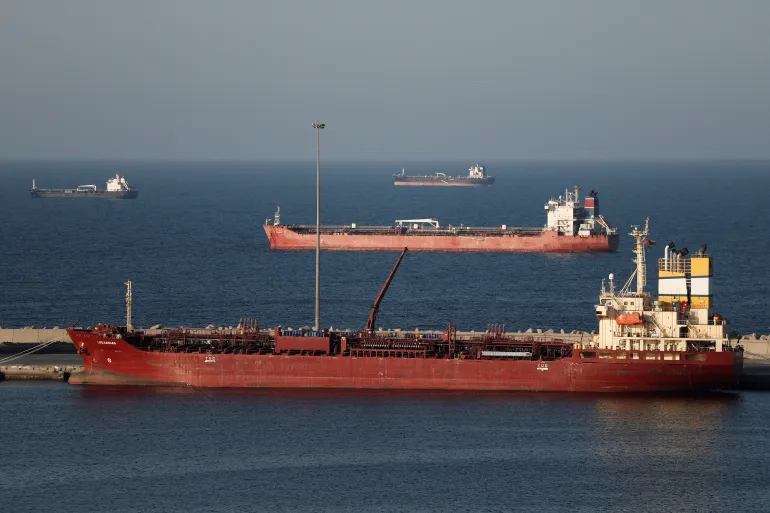
Data from the United Kingdom Maritime Trade Operations (UKMTO) illustrates the staggering scale of the disruption. Before the hostilities commenced on February 28, the Strait of Hormuz saw an average of 138 daily transits. Today, that number has withered to fewer than five, with those few vessels largely benefiting from Chinese affiliation.
Current Conflict Statistics:
Maritime Casualties: 16 commercial vessels attacked since the outbreak of war.
Supply Shortfall: Global markets are facing a daily deficit of 15-20 million barrels.
Price Escalation: Crude costs have risen nearly 40 percent since the start of the joint U.S.-Israeli strikes.
Analysis: A Market Without a "Light at the End of the Tunnel"
Despite the International Energy Agency’s (IEA) historic release of 400 million barrels from emergency reserves, and Treasury efforts to facilitate the flow of sanctioned Russian crude, the market remains unresponsive. Analysts suggest that the core issue is not just a lack of oil, but a lack of clarity.
"The key problem is a lack of tangible goals in this war," notes Adi Imsirovic of the University of Oxford. Without a clear definition of victory or a timeline for de-escalation, traders are pricing in a permanent state of instability. While the Pentagon weighs the high-risk option of naval escorts for commercial tankers, Energy Secretary Chris Wright has indicated that such operations are still weeks away, leaving the global economy in a state of perilous suspension.
"It makes it hard for oil traders to see the light at the end of the tunnel... the blockade is a lever that must continue to be used." — Combined Editorial Perspectives